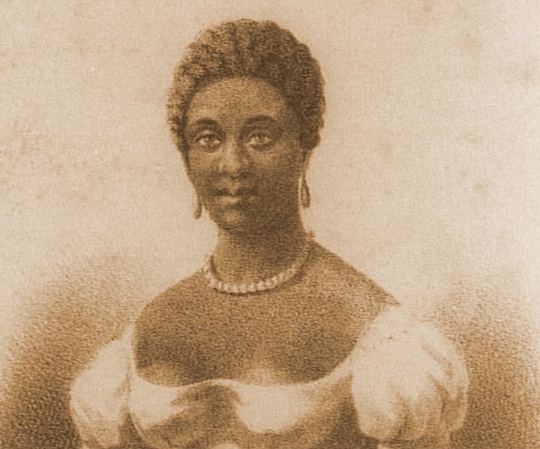
Who is your favorite historical figure?
Before Maya Angelou, Nikki Giovanni, and Alice Walker, there was Phillis Wheatley.
Who was Phillis Wheatley?
Born on May 8, 1753, in West Africa, the life of Phillis Wheatley, also spelled Phyllis and Wheatly, would soon confront significant challenges. At the age of seven, she was kidnapped from her family.
Phillis arrived in Boston, Massachusetts, in 1753 aboard the slave ship the Phillis. In this unfamiliar territory, she was sold to John and Susanna Wheatley. It is from this association that she became known as Phillis Wheatley, and there are no existing records that indicate her birth name.
The Wheatleys grew fond of Phillis. In an era when the education of African Americans in reading and writing was strictly prohibited, they made an exception for her. Within a year and a couple of months, she had mastered both skills. Phillis was instructed in the Bible and matters of faith, as well as in Greek, Latin, and British literature. Throughout her studies, she held tightly to her newfound understanding of religion and God, which soon transformed her perspective on life.
At the age of approximately 14 to 15 years, Phillis Wheatley composed and published her inaugural poem, marking the beginning of her journey as a writer. In 1773, she achieved a remarkable feat as the first American slave and the first individual of African descent, as well as only the third colonial American woman, to have her work published. Her travels took her to London, England, where she garnered considerable acclaim for her writings. Ultimately, the publication of her book was financed by Selina Hastings, the Countess of Huntingdon. Phillis’s literary compilation was titled Poems on Various Subjects, Religious and Moral. Eventually, she would attain her freedom.
Becoming a notable figure, Phillis utilized her influence to advocate for the freedom and rights of other enslaved African Americans. She supported the American Revolution and employed her literary talents to articulate pressing concerns. In her correspondence with President George Washington, she developed a great friendship, influencing conversations on liberty and justice.
Wheatley persevered in her writing, though the process grew increasingly arduous. She encountered obstacles in getting her works and books published, as the Wheatleys, who had steadfastly supported her, fell ill and ultimately passed away. Despite her freedom and talent, their absence created substantial challenges in her publishing, yet she remained resolute in her commitment to writing.
In 1778, Wheatley married John Peters, her beloved husband, from Boston, Massachusetts. Together, they welcomed three children into the world, all of whom tragically did not survive. Despite the relentless challenges she faced in publishing her work, Wheatley persisted in her writing and eventually took a position as a maid to financially support her family. This arrangement continued until the untimely death of Phillis on December 5, 1784, as a result of childbirth complications.
She was 31 years of age at the time of her passing.
Conclusion
Phillis Wheatley stands as a historical figure due to her impact on the literary aspirations of Black girls like myself. She utilized her poetic talent to advocate for righteousness. Despite the adversities, Wheatley continued in her writing, intensifying her efforts rather than turning to despair. Her determination and dedication to her art command my respect and admiration. As one of my favorite poets, I have thoroughly studied her, introduced her legacy to students, engaged them in collective exploration of her writings, and I strive to ensure that her name and story is embedded within generations.
References
“Massachusetts Historical Society: Object of the Month.” Masshist.org, 2025, http://www.masshist.org/object-of-the-month/objects/phillis-wheatley-s-earliest-poem-2011-12-01. Accessed 20 June 2025.
Michals, Debra . “Phillis Wheatley.” National Women’s History Museum, 2015, http://www.womenshistory.org/education-resources/biographies/phillis-wheatley.


 A TEACHERble Moment
Leave a reply to anandkand pandey Cancel reply